.svg)

Solving the Agentic AI Trust Gap With Business Context

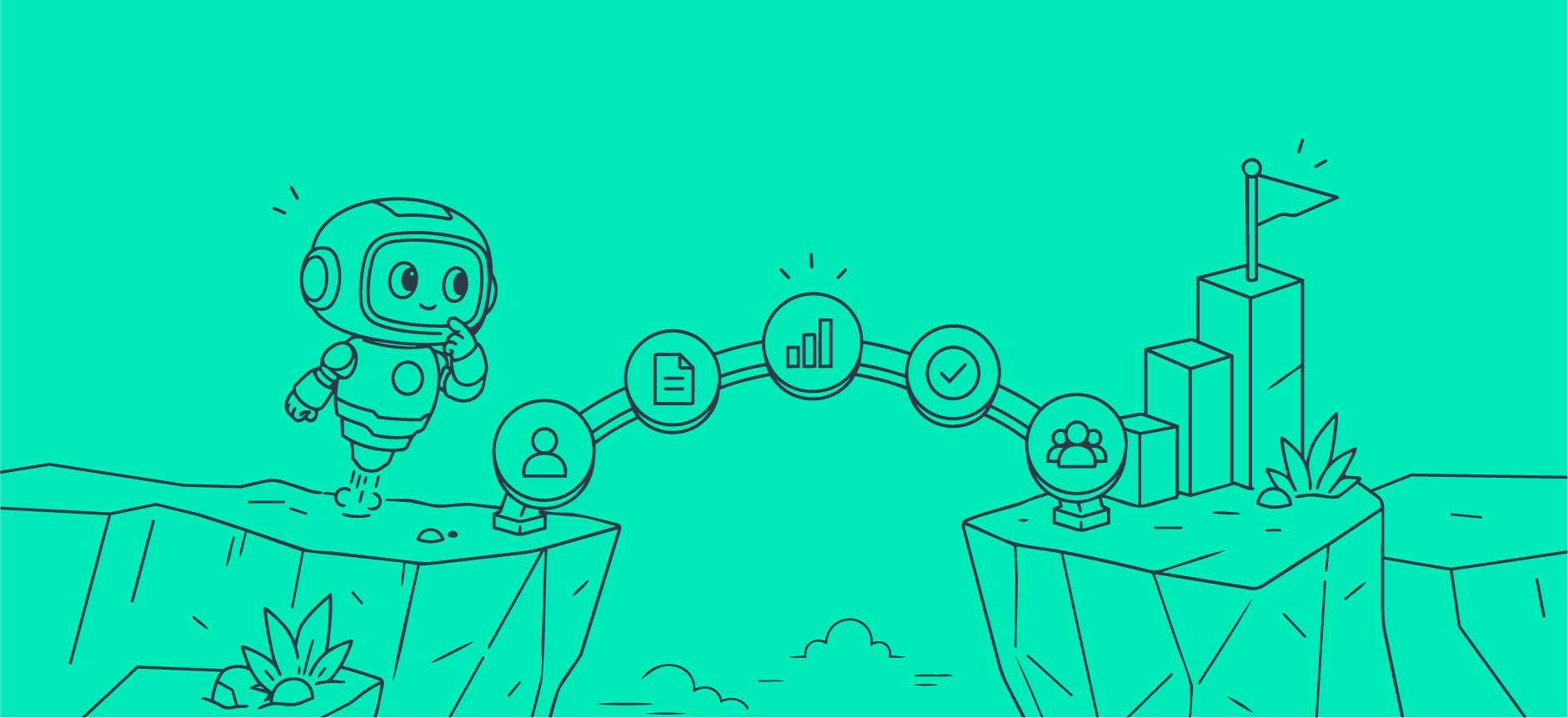
AI adoption continues to accelerate. But even when an organization takes all the right steps—aligning the executive team, choosing an ideal operational use case, designing a low-friction workflow, and selecting a large language model (LLM)—their AI initiatives often stall before delivering measurable value. The reason? More often than not, their enterprise data isn’t AI-ready.
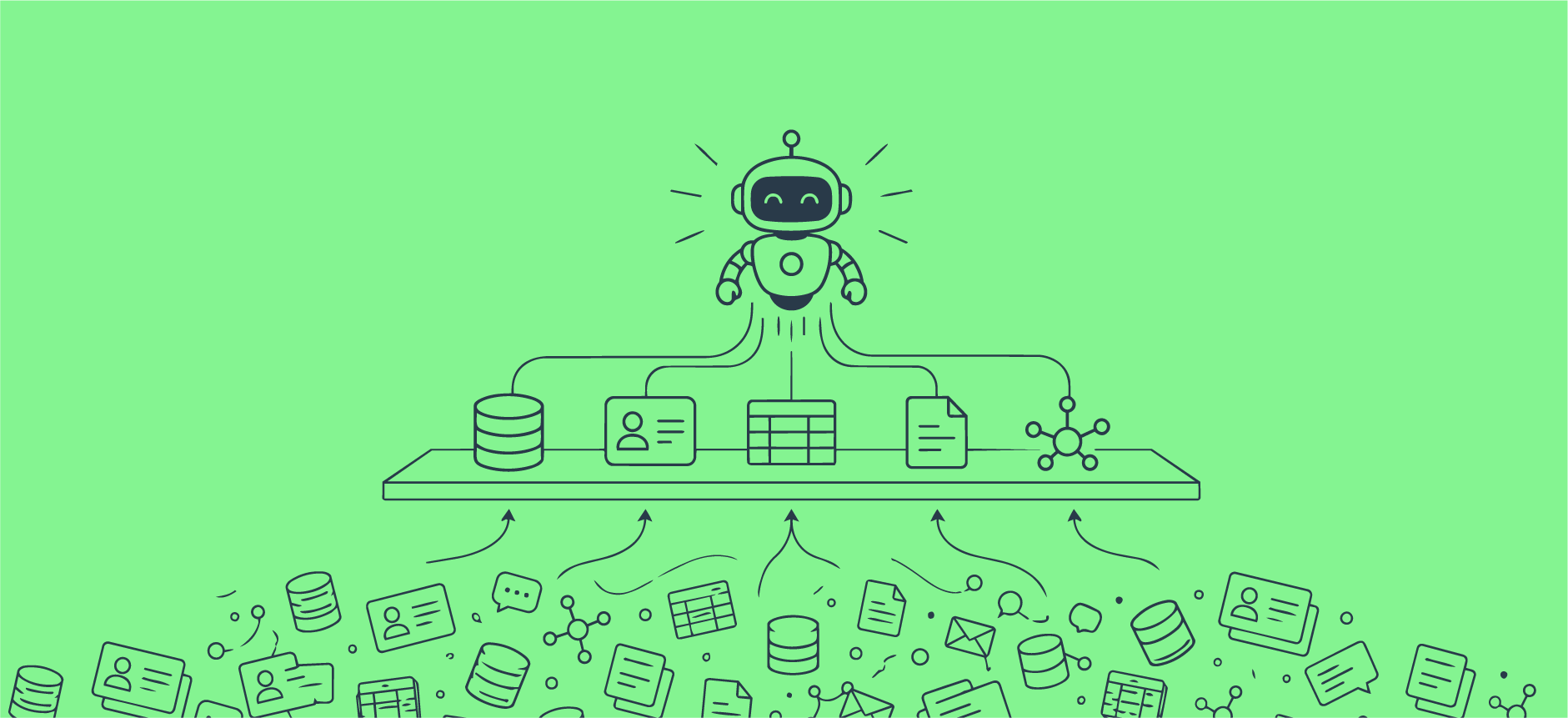
When data is fragmented, siloed, inconsistent, flawed, or outdated, AI systems and AI agents suffer from “garbage in, garbage out” syndrome, producing insights that are often inaccurate, misleading, or biased. And while it’s possible that AI will make mistakes, the real risk is that it will propagate mistakes at a velocity and scale that human oversight can’t match. As a result, these errors and potential hallucinations will be amplified across systems and workflows, eroding trust across the organization.
The good news, however, is that there is a way for organizations to overcome this challenge. Instead of relying solely on publicly available and fragmented enterprise data, organizations can (and should!) provide AI systems and agents with business context.
In our latest ebook, “How Business Context Solves the Agentic AI Trust Gap,” we explore the critical importance of business context in the agentic AI era.
What Is Business Context?
Business context is the governed, structural framework of organizational knowledge that enables AI to move beyond basic pattern matching toward true, advanced reasoning. It conveys the “why” behind the data, providing the situational awareness, provenance, and business logic agentic AI needs to deliver trustworthy insights and make sound decisions.
For example, when AI systems and AI agents struggle to connect members of the same household, it’s because they lack context. Without a connected view into the relationships among and between entities, they are unable to decipher that the records are related. As a result, a business can miss valuable loyalty, cross-sell, and upsell opportunities simply because AI lacked context.
How Do You Deliver Business Context?
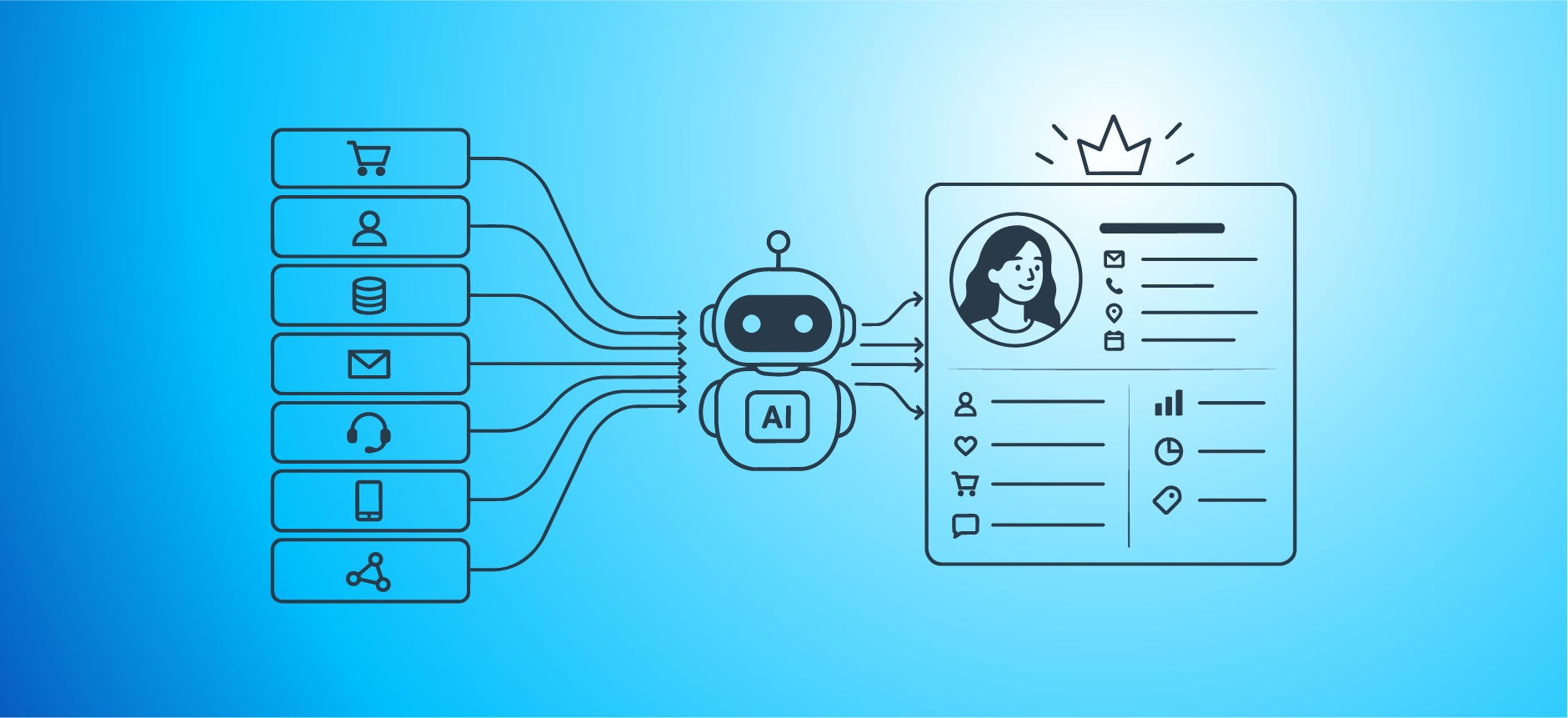
For years, the golden record has been the standard of data integrity—a single, authoritative, accurate version of a business entity’s data across multiple data sources and datasets. But when AI entered the scene, companies quickly realized that golden records are just the start.
While they form a strong foundation for trustworthy data, golden records often lack critical business context that enables organizations to see connections within and among entities. That’s why, to realize their true value, organizations must connect golden records in an enterprise knowledge graph.
An enterprise knowledge graph is a critical platform capability of AI-native master data management (MDM), providing a connected, contextualized view of an organization’s data that highlights the relationships among and between key business entities. Identifying these cross-entity relationships enables organizations to reveal meaningful—and often obscured—connections that surface valuable, actionable insights.
By delivering clean, curated entities and rich relational context, an enterprise knowledge graph allows AI agents to see the full picture of a golden record, including its history, its current connections and relationships, and other contextual information needed to make decisions and resolve conflicts in real time.
Providing Business Context With AI-Native MDM
AI-native MDM’s flexible, cloud-native architecture, equipped with APIs and webhooks, delivers rich, trusted data to downstream agents in real time. Using enterprise knowledge graphs, AI-native MDM also surfaces hidden connections and relationships within the data, giving AI systems and AI agents the additional context they need to resolve conflicts, surface anomalies, and make accurate curation decisions.
With this context in hand, an AI agent can respond to a question like “What do we know about ABC Corp?” with more than just fragmented details. Instead, it can tap into a comprehensive, connected knowledge graph of mastered data that answers additional questions such as:
- “What has ABC Corp purchased from us?”
- “Do we have any active contracts with ABC Corp?”
- “If so, what are the terms?”
- “When was the last interaction with ABC Corp?”
By understanding the intent behind the question, the agent does more than just retrieve data. It allows users to interrogate the data and ask it additional, more complex questions.
Closing the Agentic AI Trust Gap With Tamr
As agentic AI continues to reshape how organizations interact with and consume enterprise data, it’s critical that businesses anchor their AI strategy in high-quality data.
For more than a decade, Tamr has focused on building and using AI and machine learning to deliver clean, contextual, trustworthy data cost-effectively and at scale. Everything we do—from architecture and workflows to user interfaces and platform capabilities—is built with AI at the core.
As the AI-native MDM standard, Tamr transforms disconnected data into golden records, connects data across domains, and produces enterprise knowledge graphs—all critical elements needed to provide the valuable context AI systems and agents need to deliver trustworthy results. Read the ebook now.
Get a free, no-obligation 30-minute demo of Tamr.
Discover how our AI-native MDM solution can help you master your data with ease!