Webinar Highlights: How Iron Mountain Built Confidence in Their Data to Fuel Agentic Workflows


The success of agentic workflows depends entirely on the quality of the underlying data. Yet when enterprise data remains scattered, incomplete, and disjointed, building the trust required for reliable AI outcomes becomes an uphill battle.
In our recent webinar with Iron Mountain’s Director of Enterprise Platform Architecture, Jarret Garcia, he and Tamr CEO Anthony Deighton dig into five important questions:
- Is poor data management one of the main reasons AI projects fail?
- What does a real enterprise data workflow actually look like?
- How do you give agents the right access?
- How is Iron Mountain using AI agents?
- Where does AI-native master data management (MDM) fit into this picture?
Watch the webinar replay to hear the full discussion. And here are some highlights below.
How Iron Mountain Fuels AI Agents with Trustworthy Master Data
Organizations worldwide are rushing to adopt AI, but many are hitting a wall—watching promising projects stall or collapse altogether.
Iron Mountain knew that to succeed with AI, they first needed to build a strong foundation of trustworthy data. Many organizations start by consolidating all of their data into a data lake or data warehouse. But this approach creates a context problem. Without critical business context, AI agents have too many options and too many definitions to wade through, making them more prone to delivering misinformation or hallucinated results. And when agents go off the rails, it erodes trust in AI.
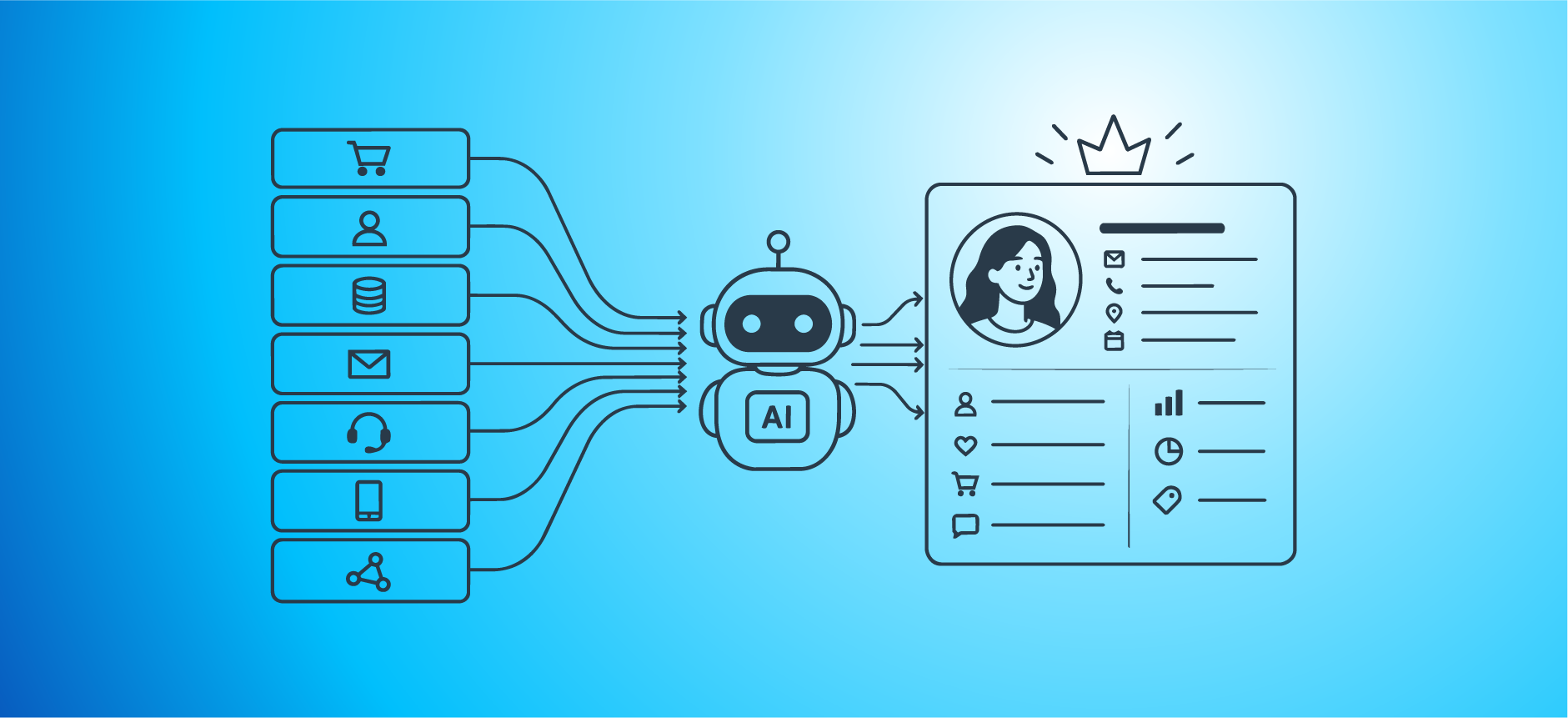
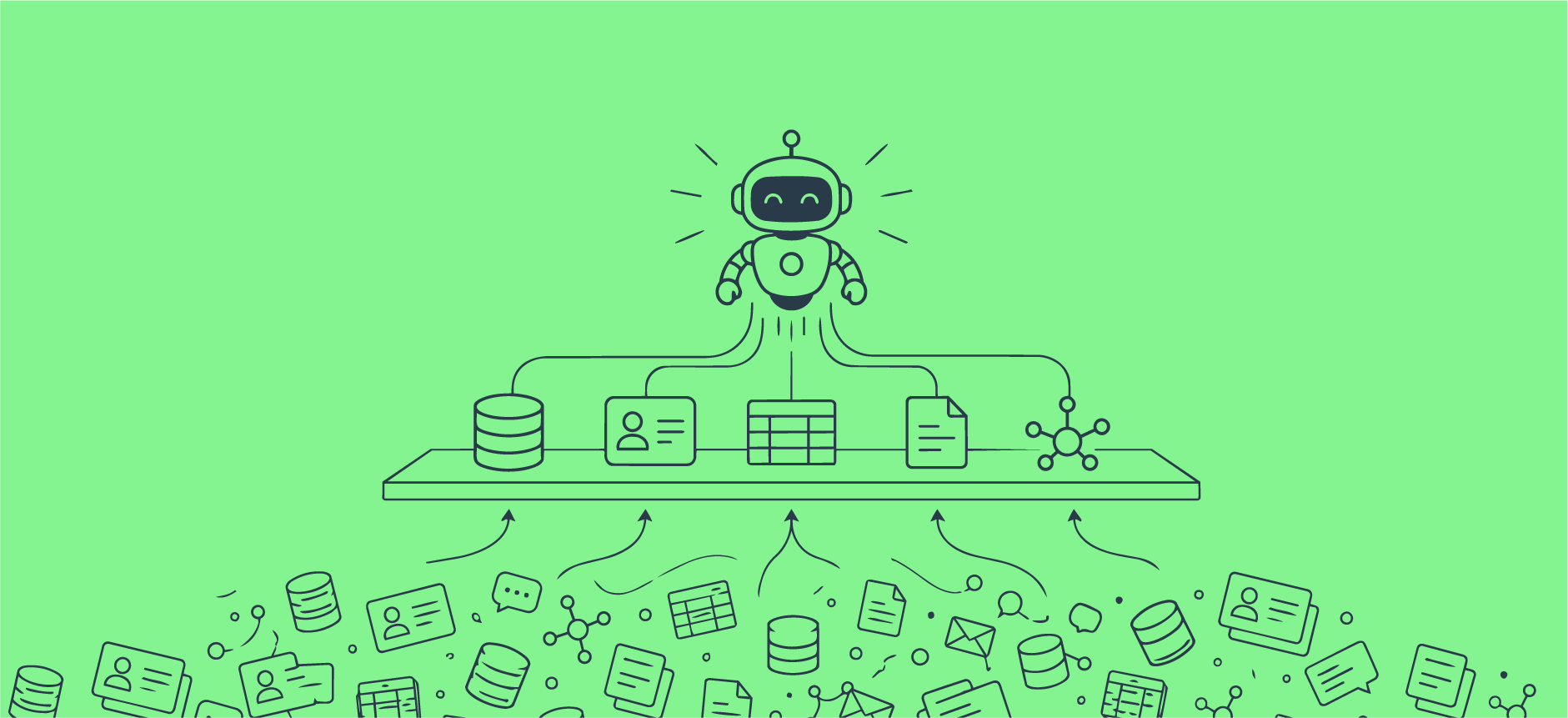
Instead, Iron Mountain started with a foundation in solid master data. They combined data from their 250+ source systems into an MDM layer to produce trustworthy golden records that feed AI agents, analytics, and operational systems. With golden records serving as the data foundation for agentic workflows, Iron Mountain felt confident that the information AI agents produced was accurate.
In addition, Iron Mountain carefully defined access rights for their AI agents, ensuring that no agent had access permissions that exceeded those of a human doing the same task. This level of AI governance helped to keep sensitive data protected and secure, reducing the risk of hallucinations.
In addition, when considering which workflows to delegate to agents—and which ones required humans to be in the loop—they used a simple framework:
- Full automation: Agent is responsible for low-risk, reversible updates such as verified contact propagation or bounce handling.
- Human oversight: Agent conducts the research and drafts the record while a human makes the final check.
- Human ownership: Humans own high-stakes or sensitive changes where reputational risk outweighs speed.
Ultimately, this framework enabled the team to strike the right balance between automated efficiency and essential human oversight.
Where Iron Mountain Deployed AI Agents
Accurate contact data is critical for many departments across the Iron Mountain organization. But keeping that data up-to-date is a manual, tedious, time-consuming task. To address this issue, Iron Mountain deployed an AI agent to scan the 10,000+ emails the company receives every day. The agents read the email signatures, extract contact info, and validate this info against existing records. Once the information is validated, Iron Mountain uses Tamr to match, deduplicate, and enrich the contact records. Iron Mountain then propagates the verified data to their operational and analytical systems. Iron Mountain also uses an AI agent to flag bounceback emails so the company can update their records when a key business contact leaves an organization.
Using these agents, Iron Mountain is improving the accuracy of their billing contacts, ensuring collections notices reach the right people, and maintaining data quality.
What is the Role of AI-Native MDM?
When it comes to agentic workflows, AI-native MDM plays three important roles:
- Agents act on your behalf inside Tamr: Agents perform curation, verification, and enrichment.
- AI-driven configuration: Large language models (LLMs) perform tasks such as adding new data sources to Tamr.
- MCP server and open connectivity: Organizations can connect custom AI agents and tools directly into the master data layer.
By embedding trust at every layer, AI-native MDM gives agents the precise, unified data they need to act confidently and appropriately.
Learn more about how Iron Mountain used Tamr to deliver the trustworthy golden records needed to fuel agentic workflows. Watch the on-demand webinar now.
Get a free, no-obligation 30-minute demo of Tamr.
Discover how our AI-native MDM solution can help you master your data with ease!