AI Agent Orchestration in Master Data Management

AI agents are quickly becoming a strategic priority in enterprise data management. And it’s no surprise, really. For decades, master data management (MDM) was plagued by manual stewardship bottlenecks, fragmented schema alignment, and endless rule reconciliation. AI agent orchestration offers a compelling path forward, enabling specialized agents to execute tasks that previously required extensive human intervention. But in the rush to adopt autonomous workflows, many data teams are over-engineering solutions for problems a simple prompt or script could solve.
Knowing when to deploy an orchestrated agent network—and, perhaps even more important, when to avoid one—is fast becoming a defining capability for modern data leaders. In this post, we’ll explore where autonomous AI agents deliver genuine value, where traditional tactics still reign, and how to strike the right balance for your data architecture.
What is AI Agent Orchestration?
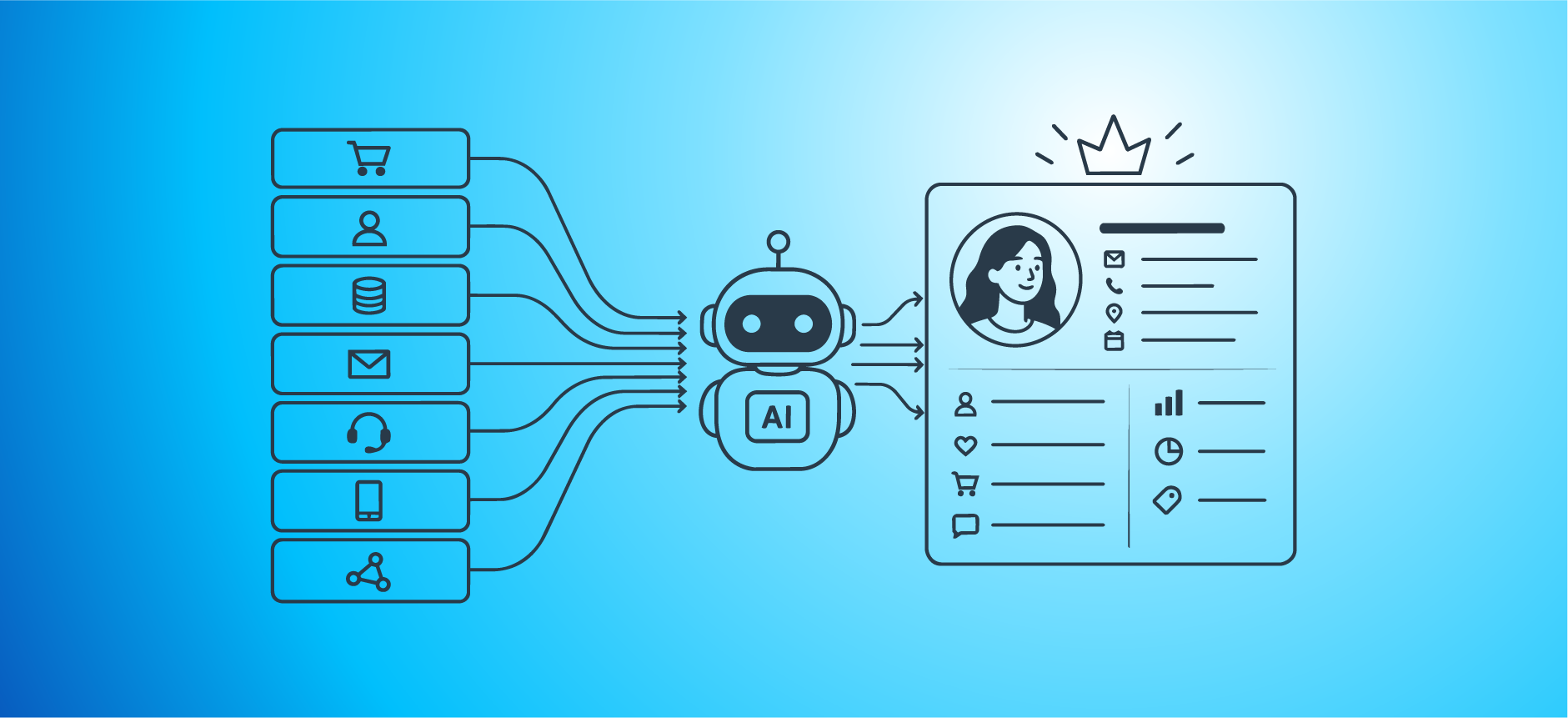
AI agent orchestration is an approach where autonomous agents work together to streamline data mastering processes within MDM systems. By assigning AI agents to specialized tasks such as cross-entity matching, context verification, and anomaly detection, organizations can quickly resolve complex data discrepancies at scale without the need for traditional, rules-based approaches.
It’s important to remember, however, that this level of autonomy is not a blanket replacement for every rule you’ve developed. Your goal shouldn’t be to replace every workflow with AI, but rather to target the specific workflows where agent orchestration can eliminate backlogs, accelerate resolutions, and boost data trust—without introducing unnecessary complexity.
How Does AI Agent Orchestration Work?
If you think about general interactions with AI agents, they usually go something like this:
- You ask an agent a question
- The agent queries a select data set
- The agent returns a response
- You review the response and judge its accuracy and trustworthiness
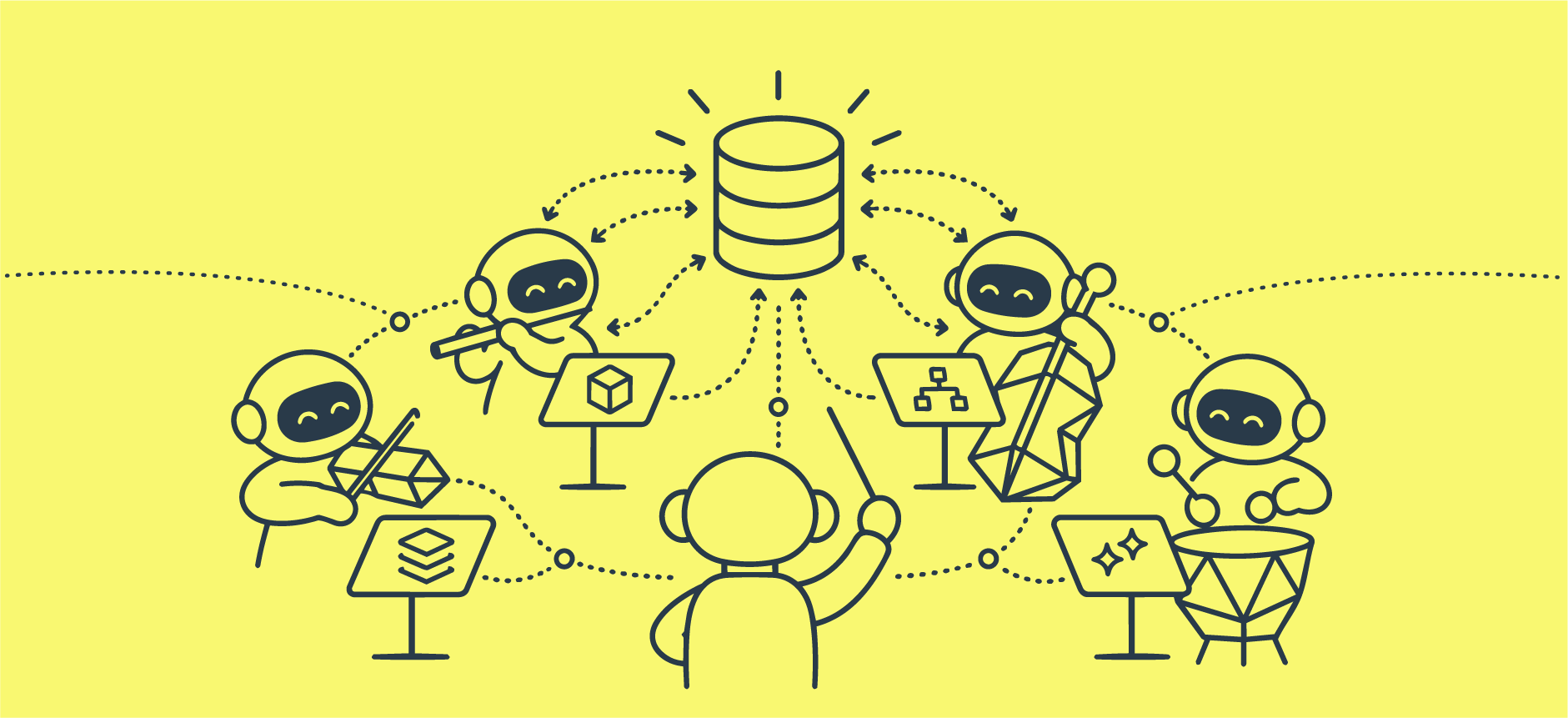
While this prompt-response model works well in many situations, enterprise workflows demand something far more robust. To run AI safely and effectively at scale, you need agent orchestration—the layer that coordinates, manages, and governs a team of specialized AI agents working across complex data environments.
Instead of manually driving every interaction, agent orchestration shifts the paradigm:
- Define goals and scope: Articulate the high-level objective in plain language (e.g., “Update corporate hierarchies based on Q3 restructuring plan” or “Identify and fix orphaned employee records”).
- Generate plan and dispatch agents: Break the goal into specific tasks and route them to specialized agents with defined scopes and permissions.
- Govern processes and queue for human review: Monitor progress, enforce security and compliance policies, apply specific guardrails for each task, and automatically route low-confidence decisions or sensitive edge cases to a queue for human review.
What Does a Good Use Case for Agent Orchestration Look Like?
Keeping firmographic data about corporate relationships up to date is a good example of where agent orchestration delivers real business value.
For businesses, understanding parent-subsidiary relationships is essential to negotiating better terms, identifying potential upsell opportunities, and managing risk. Yet maintaining firmographic data such as parent companies relative to sites or subsidiaries is an exhaustive, manual undertaking. Traditionally, companies purchased and aggregated data from multiple, expensive sources. But this information is notoriously complex, difficult to adapt to specific use cases, and outdated almost immediately.
Agent orchestration transforms this tedious, time-consuming work into a streamlined, automated process. Instead of a data engineer manually updating information to ensure completeness and quality, you can issue a high-level objective to “maintain and enrich corporate relationships across our systems” and deploy specialized agents to handle each of the various subtasks:
- Identifying and reconciling semantically similar records within organizational systems (e.g., “Acme Cloud LLC” in Salesforce and “Acme Corp” in SAP)
- Comparing the extracts against verified third-party data sources
- Flagging anomalies such as duplicate records
- Drafting emails or Slack messages to alert account owners or data stewards so they can quickly resolve edge cases
Once approved, updates can deploy concurrently to all downstream systems with a full record of changes for auditability. As a result, teams eliminate weeks of manual upkeep, allowing them to focus their time and energy on reviewing ambiguous edge cases.
When is Agent Orchestration Overkill?
Agent orchestration is powerful, but it’s not a silver bullet. In fact, inserting multiple AI agents into simple data mastering workflows often adds unnecessary complexity, time, and cost. As a rule of thumb, if a task follows straightforward logic, even at a very large scale, deploying an orchestrated team of agents is often overkill. In these situations, the overhead costs and effort of dispatching agents, coordinating their activities, and governing their responses simply don’t make sense without a reliable way to invoke the agents only when needed. In fact, more traditional approaches are often cheaper, faster, and less error-prone.
Understanding when agent orchestration is appropriate—and when it is not—is key to delivering real business value. Keep in mind that orchestration works best when applied to unstructured data and cases where organizations need to solve multiple, different problems depending on the context, while more simplistic approaches work well for basic tasks. The bottom line: Use the right model for the job at hand.
The Future of Enterprise AI
AI agent orchestration enables organizations to scale AI from simple, isolated tasks to complex business processes. By understanding when orchestration makes sense—and when it’s too much—organizations can scale AI safely and efficiently. After all, the goal isn’t to remove human judgment from the equation. It’s to design an AI architecture that is powerful, practical, and scalable for the long term.
Get a free, no-obligation 30-minute demo of Tamr.
Discover how our AI-native MDM solution can help you master your data with ease!