.svg)

7 Signs Your MDM Needs an Upgrade

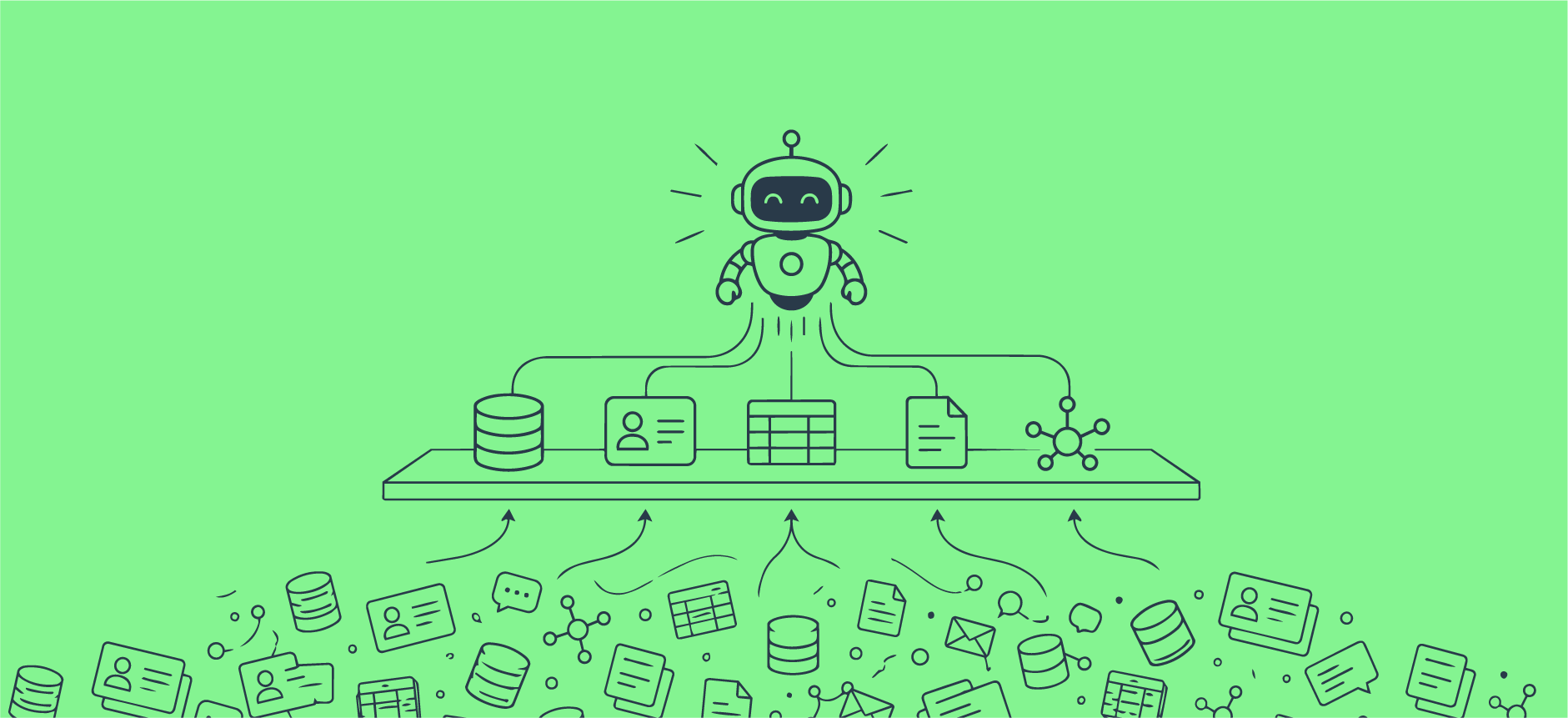
Master data management (MDM) solutions have been a mainstay in the data ecosystem for decades. But like many organizations, you may still be relying on an outdated, rules-based solution. We get it. The thought of replacing a solution ingrained in your day-to-day workflows is daunting.
But if you take a closer look at your traditional master data management software, you’ll likely notice it’s showing signs of wear and tear. Rules are breaking. Scalability is poor. Ability to handle new types of data is absent. And debates over whether or not insights and AI output can be trusted happen all the time. Not to mention the consistent complaints from your data team about the arduous, manual data cleaning work they still need to do.
If any of these challenges sound familiar, it may be time for you to upgrade your MDM.
7 Signs Your MDM Needs an Update
The following are telltale signs your MDM solution needs an upgrade. If you’re experiencing one—or many—it’s time to start making the case to modernize your MDM strategy with an AI-based approach.
1. Your rules are breaking
Broken rules are the number one sign that you need an MDM upgrade. Here’s why. As data becomes increasingly complex and interconnected, it requires more and more (and more!) rules to master it. These rules, layered upon each other over time, become brittle, unable to keep up with the volume and complexity of modern data. And when you consider the speed at which this complex, interconnected data is changing, it becomes almost impossible for a rules-based solution to cope.
AI-native MDM solutions, on the other hand, use a combination of advanced AI/ML models, AI agents, and human governance to master data at scale—even the difficult edge cases that are complex and close to consumption.
2. Manual work is routine
Manual work, from time to time, is an essential part of data management. But when manual effort consumes the majority of your data team’s time, it’s a sign that you need to make a change. Many organizations still rely on large data teams to manually assess and clean up major portions of their enterprise data. And traditional, rules-based MDM solutions rely heavily on humans to code and troubleshoot mastering rules. AI-native solutions, in contrast, utilize AI/ML models and LLM-based AI agents to handle 95% of the mastering process, leaving only the “last mile” for humans or AI agents to resolve. This approach significantly reduces the data team’s manual work, so they can focus their energy on providing strategic guidance to solve the most complex cases.
3. Your solution can’t scale
If you’re still relying on rules, you’re well aware that when your data changes or new sources are added, your rules must change, too. In fact, your data team probably complains regularly about the time-consuming manual work it causes! Rules-based MDM solutions, while once considered innovative, were built for static data and struggle to scale across business units and regions. And when this situation occurs, that means it’s time to upgrade your MDM.
AI-native, SaaS-based solutions are designed to master large volumes of dynamic data at scale. Instead of just relying on rules, AI-native MDM uses a layered approach of smart rules, advanced AI/ML, and agentic data curation to handle 95%+ of the work required to master data at scale without the hassles of managing large sets of rules.
4. Outputs are inconsistent, incomplete, and inaccurate
Have you ever been in a meeting where different departments answer the same question with different data? Where discussions derail into debating whose data is right instead of what decision to make? If so, then you’ve been involved in a data brawl. And that’s a big red flag that your MDM needs an upgrade.
AI-native MDM eliminates data brawls by delivering a golden record—a single source of truth that reflects the best, most accurate, and up-to-date version of a key business entity for use in analytics, operations, and AI initiatives.
5. Results take months or years (not days or weeks)
How long does it take to master a new data set? If your answer is “months—or even years!” then you’re way overdue to upgrade your MDM software.
AI-native MDM delivers results quickly—in days or weeks (not months or years). And an AI-native MDM that is SaaS-based is quick to deploy because it doesn’t require extensive IT support, infrastructure buildouts, or coding.
6. Data silos persist
If your enterprise data is trapped in data silos, it’s a telltale sign that your MDM needs an upgrade. Data silos prevent AI from accessing the complete, connected context needed to deliver trustworthy insights and AI output. Without clean, unified data, LLM-based AI models can’t learn effectively and deliver real value to the business.
With an AI-native MDM, your organization can eradicate data silos once and for all. By resolving entities across silos and sources and enriching the unified data, your organization can finally produce golden records that are accurate, complete, and continuously maintained, serving as the ground truth for AI, analytical, and operational applications.
7. AI is bolted-on
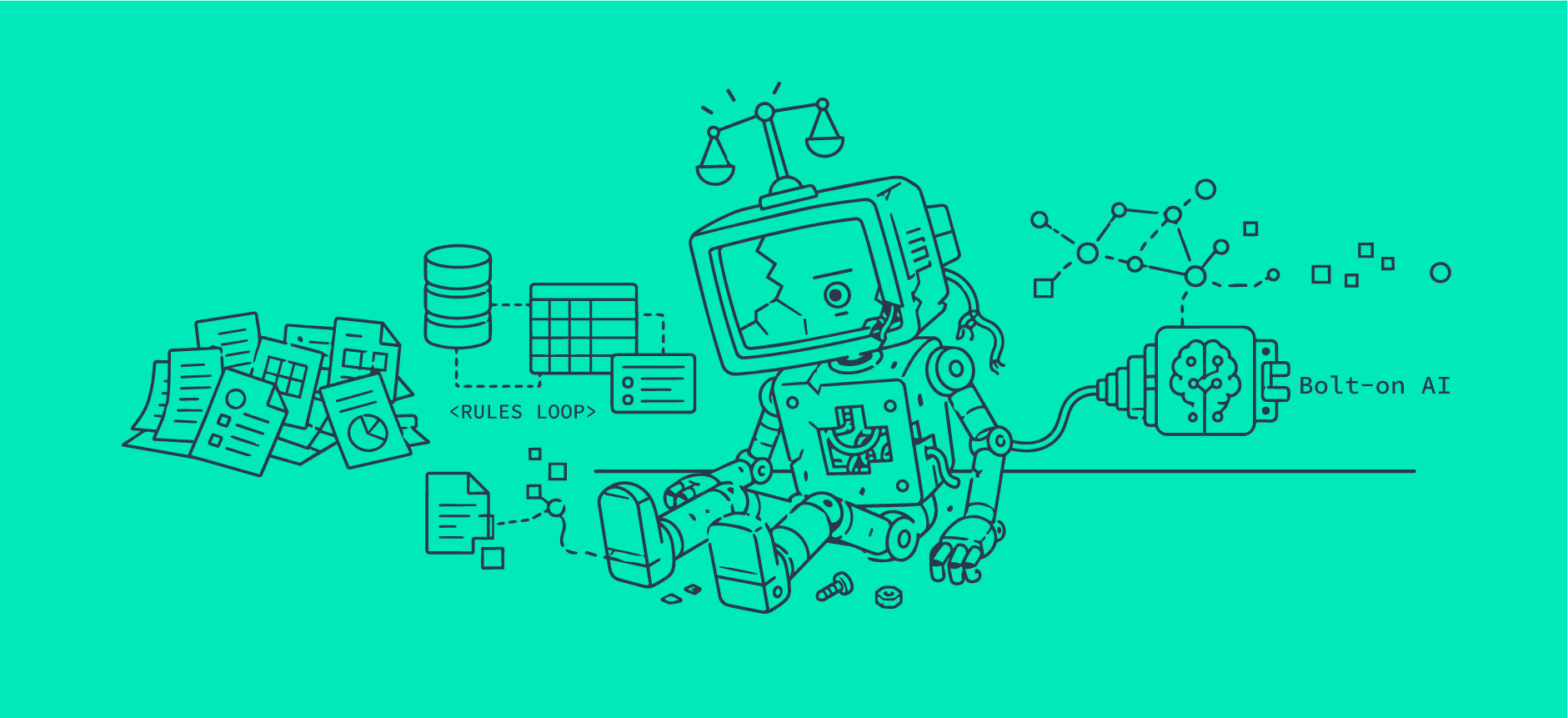
Is your MDM solution starting to feel like a Franken-monster—with bolted-on features that are disjointed and stitched on as an afterthought? Do these added AI features simply provide a chatbot interface or serve to recommend more and more rules for your MDM? If so, then beware! You need an MDM upgrade before the situation gets even scarier.
AI-native MDM is purpose-built with AI at the core, meaning every aspect of the solution—from architecture to workflows to user interfaces—taps into the full power of AI. This approach makes data mastering faster, easier, and more efficient, enabling you to create far better outcomes at much lower cost when compared with aging, cobbled-together MDM solutions.
The Future is AI-Native
If your organization is experiencing one (or more!) of the seven signs above, then it’s time to seriously consider upgrading your MDM strategy to embrace AI-native MDM. If you don’t, you risk falling behind, unable to take advantage of the full value your data has to offer.
If you’re ready to make the case, but are unsure where to start, download our ebook “How-to Guide: Building a Business Case for AI-Native MDM.” In it, you’ll find a checklist of essential elements, how to overcome common objections, and the tools and techniques you need to estimate financial benefits, cost savings, and time-to-value.
Get a free, no-obligation 30-minute demo of Tamr.
Discover how our AI-native MDM solution can help you master your data with ease!