.svg)

What Are the Top CDO Priorities for 2026?

- Explore the six priorities shaping the CDO agenda in 2026 as data leaders balance innovation, risk, and business impact.
- Strengthen data quality for AI by delivering clean, curated golden records that support analytics, operations, and AI applications.
- Enable responsible AI by addressing bias, hallucinations, and trust through strong data quality, governance, and transparency practices.
- Deepen collaboration with business stakeholders to ensure data and AI initiatives align with organizational needs and outcomes.
- Promote data and AI literacy across the organization so teams can better understand, trust, and apply AI-driven results.
- Break down enterprise silos with multi-domain data mastering to create connected, relationship-rich views of critical business entities.
- Modernize legacy MDM with secure SaaS-based architectures built to support speed, scale, and change.
As organizations kick off the new year, data leaders are facing a pivotal moment. Fundamentals such as data quality, data governance, and the right data management infrastructure remain important, but evolving expectations around speed, scale, and automation are adding new priorities to the list. In some organizations, AI—and AI agents—are becoming increasingly embedded in everyday operations, prompting data leaders to address user concerns over hallucinations and manage ongoing challenges related to the process and cultural shifts associated with the evolving data landscape. For others, the time has come to finally modernize their traditional master data management (MDM) approach.
As these pressures mount, the question is no longer if data matters, but rather which priorities will deliver the most value to the business. As a result, chief data officers (CDOs) must balance innovation with risk, scalability with governance, and investment with the organization’s ability to change. How they strike that balance will increasingly define their impact as business leaders. As such, the following priorities represent where CDOs should concentrate their efforts in the year ahead to increase the value their data delivers.
6 Chief Data Officer Priorities for 2026
The following list reflects the six key areas shaping the CDO agenda this year.
1. Data quality for use in AI
Data quality is a persistent priority for CDOs. Yet in 2026, the need for better data quality becomes even more acute. As AI and AI agents continue to proliferate across mainstream applications and operational workflows, the importance of high-quality data continues to rise.
However, as any CDO will tell you, resolving data overlap and discrepancies and delivering trustworthy golden records is easier said than done. While traditional, rules-based MDM solutions for managing data quality may get you up to 60% of the way toward accurate, trustworthy data, they come with a significant cost and a lot of complexity. And leaving 40%+ of your data unresolved means an awful lot of work still needs to be done manually. That’s why savvy CDOs know they need to adopt an AI-native MDM solution like Tamr.
Tamr’s machine-learning-centric approach to data mastering gets you 90-95% of the way to delivering clean, curated, trustworthy golden records. It does so quickly and cost-effectively using probabilistic pre-built models. And with the addition of agentic data curation (employing LLM-based agents to automate more of the data curation process), Tamr has the capacity to intelligently clean, curate, manage, and refine what many refer to as “the last mile” of enterprise data—the part that addresses the idiosyncrasies and complex edge cases that are close to consumption and difficult to decipher.
The takeaway: Data quality still matters, perhaps now more than ever. But when it comes to AI in MDM, using the right tool for the job matters just as much. Tamr is the AI-native MDM standard, employing machine learning, deep learning, and generative AI-based agents to deliver the trustworthy golden records needed to fuel downstream analytics, operations, and AI applications. Using Tamr, CDOs can rest assured that the data they feed their AI will deliver high-quality insights that users can use and trust, reducing concerns about poor decision-making and hallucinations.
2. Responsible AI
As AI adoption continues to rise, organizations are increasingly using AI systems and LLM-based agents to influence decisions, operations, and customer experiences. However, as AI becomes more ubiquitous in modern business, issues of bias, explainability, privacy, and reliability are increasingly coming to the forefront—and for good reason. Missteps can cause significant financial, legal, and reputational risk.
CDOs play a central role in establishing the guardrails for responsible AI, including building strong data quality, governance, transparency, and accountability practices into AI initiatives from the start. By prioritizing responsible AI, data leaders not only reduce risk, but they also build trust. And that, in turn, accelerates adoption and ensures AI delivers sustainable value as it scales across the organization.
Think about it: When the insights AI delivers are accurate, adoption accelerates because users trust them and apply them in decision-making. But when a model’s underlying data is inaccurate, incomplete, or outdated, AI systems are more likely to amplify bias, hallucinate, or deliver insights that are difficult to trust. As a result, users are skeptical of the output and unlikely to use it to make business decisions. That’s why it bears repeating: Clean, consistent, curated data is the foundation for responsible AI.
The takeaway: As AI becomes deeply embedded in business operations, prioritizing responsible AI is no longer optional. Not only does responsible AI protect organizations from risk, but it also ensures that business decisions are grounded in insights that users can trust. By focusing on data quality, governance, transparency, and accountability, CDOs can ensure that they are delivering the responsible AI applications needed to drive true business value.
3. Collaboration with the business
This next priority is less about data and technology and more about how teams work together. Historically, many data leaders operated at a distance from business users, focusing on infrastructure, tooling, and governance. This disconnect led to an array of challenges ranging from misaligned priorities and slow adoption of data-related initiatives to skepticism about the quality of the data and the value it delivers, reinforcing the perception that data was difficult to access or use. As a result, organizations failed to tap into the full value of their data—not because of poor technology or lack of effort, but because there was no meaningful partnership between the CDO and the business.
This year, it’s imperative that CDOs invest the time to build meaningful relationships with business stakeholders and speak their language. Through strong collaboration, CDOs can better understand organizational priorities and data challenges, allowing them to align data and AI initiatives with what the business needs most. As a result, CDOs can ensure that the strategies they develop—and the tools they implement—will not only address data-related pain points, but also demonstrate value by delivering the trustworthy insights business leaders need to deliver better outcomes.
The takeaway: Strong collaboration between CDOs and the business ensures that data and AI initiatives not only remain tightly aligned to organizational priorities, but also produce insights business leaders can trust. In turn, that trust builds confidence, encouraging business stakeholders to use data more consistently to drive smarter decisions and move the organization forward.
4. Data and AI literacy
In addition to strong collaboration with the business, it’s also important for CDOs to promote data and AI literacy throughout the organization. Data and AI literacy empowers users to understand, trust, and effectively apply insights in order to turn information into confident, informed decisions.
Moreover, strong data and AI literacy reinforces ethical AI practices and emphasizes the value of reliable, high-quality data. By understanding the limitations and risks AI systems introduce, users are better equipped to spot anomalies and faulty insights that could lead to biased results or hallucinations.
The takeaway: Knowledge is power. By promoting data and AI literacy throughout the organization, CDOs can drive informed decision-making and accelerate the responsible adoption of AI.
5. Multi-domain data mastering
Managing data scattered across disparate, disconnected systems remains an ongoing data management challenge. After all, when data lives in multiple, disparate silos, it’s difficult—if not impossible—to deliver the holistic, 360-degree views of key business entities that the business demands. That’s why mastering data across multiple domains made it onto this year’s CDO priority list.
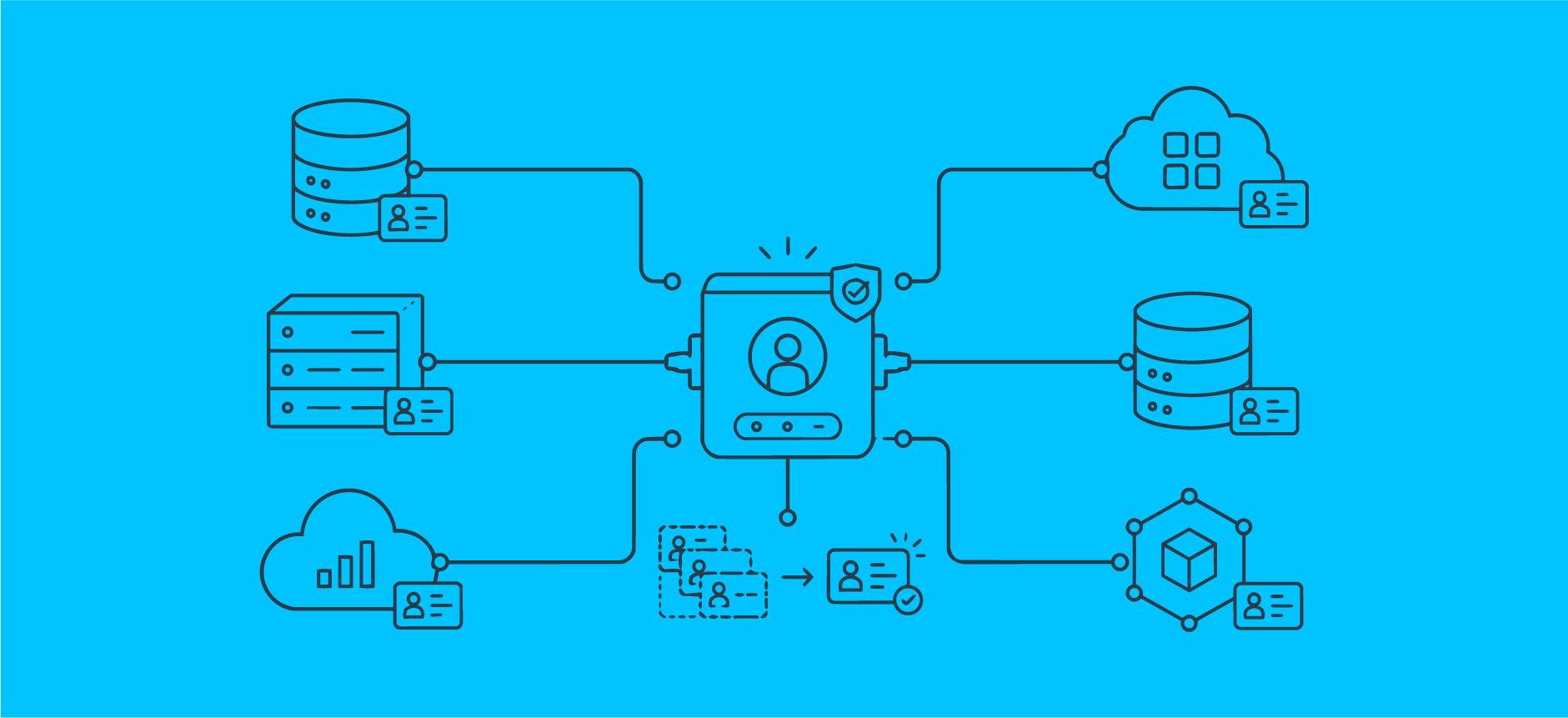
Multi-domain MDM unifies multiple types of business-critical data including customers, locations, suppliers, products, and more across systems and silos to provide a single, trusted source of truth across the organization. By connecting multiple domains within an enterprise knowledge graph, businesses can connect B2B contacts to accounts, consumers to households, clinicians to organizations, and suppliers to invoices, providing visibility into how entities influence each other. Once connected, these enterprise knowledge graphs can surface valuable, actionable insights such as identifying new cross-sell or upsell opportunities that were previously obscured from view.
Tamr’s enterprise MDM provides the proven, AI-native platform and prebuilt data products needed to master data across domains. And once integrated with commonly used enterprise systems, Tamr can ensure relationship-rich entity records are synced across every downstream application in real time to improve workflows, enhance reporting, and fuel AI initiatives.
The takeaway: Breaking down silos continues to top the list of chief data officer priorities. Using AI-native MDM, CDOs can deliver the advanced capabilities needed to connect enterprise data across multiple domains to deliver a complete and connected view of any business entity for use in analytics, operations, and AI applications.
6. SaaS modernization
In recent years, the adoption of cloud data storage and cloud data warehouse solutions like Snowflake, Databricks, and Google BigQuery has skyrocketed. And these investments have paved the way for organizations to adopt other SaaS-based solutions like Tamr.
That’s why, as CDOs look to modernize their MDM solution, a secure, SaaS-based architecture tops the list as a must-have requirement. But as savvy CDOs know, many solutions that claim to be SaaS-based actually fail to address one (or more!) critical requirements.
As CDOs prioritize modernizing their MDM, it’s essential that they ask the following five questions:
- Does the MDM provider take full responsibility for hosting, managing, and monitoring the solution?
- Is the solution SOC 2, Type II compliant?
- Can the solution automatically scale up or scale down resources in near real time, enabling the vendor to rightsize the infrastructure based on demand?
- Does the solution have a verifiable multi-tenant architecture?
- Does the vendor deliver tools to monitor the solution, send alerts and notifications, and conduct failover processes if an issue arises?
True SaaS solution providers like Tamr will be able to answer these questions with a confident “yes!” while providers simply masquerading as cloud-based will not.
Further, it’s prudent to ask questions about the security of the solution. At Tamr, we’ve created a Trust Portal that provides transparency into our security posture and offers access to our security documentation, underscoring our unwavering commitment to data security and privacy.
The takeaway: Not all SaaS-based solutions are created equal! CDOs looking to modernize their MDM should do their homework and ensure that the solution they choose is a true, SaaS-based MDM like Tamr.
Accomplishing CDO Priorities in 2026
For CDOs, remaining focused on priorities that will move the business forward is more critical than ever before. From data quality and responsible AI to cross-departmental collaboration, AI literacy, and more, these focus areas are defining this year’s CDO agenda. With these priorities in mind, CDOs can ensure that 2026 is the year when they can finally deliver the holistic, trustworthy insights everyone across the business needs to make better, more informed decisions.
Get a free, no-obligation 30-minute demo of Tamr.
Discover how our AI-native MDM solution can help you master your data with ease!